
Intro
From everyday brands to Olympic games, Greek mythology has left a lasting impact on society.
The timeless stories of gods, people, and creatures are a reflection of human nature and inspire many things in our daily lives.
Greek mythology can be seen in many parts of everyday life. Many companies use mythological names and logos to represent qualities such as strength, beauty, and power. Movies, books, and video games also retell myths in many ways. In architecture and art, Greek mythology inspires designs and artworks. Many English words and expressions have origins in Greek myths. Astrology is also connected to mythology.
In this research paper, we’ll explore how Greek mythology influences ,branding, media, architecture, art, language, and astrology.
Brands
Greek mythology is an inspiration for many brands globally, according to Design Magazine. It provides tales, themes, and archetypes of human experiences. By using mythological names, brands can create strong identities and connect with audiences across many cultures and generations.
Greek mythology in branding can be seen in names, logos, and even storytelling. For instance, the sportswear brand Nike takes its name from the Greek goddess of victory, Nike. This name is a great choice as it conveys themes of endurance and preseverance—perfect for a brand that sells mainly to athletes and sports enthusiasts. (put your source here)
Another example is the jewelry brand Pandora. It takes its name from the mythological figure crafted by Hephaestus, the god of craftsmanship. This connection highlights the brand’s dedication to skill, artistry, and intricate design.
Another example is Nyx, named after the goddess of darkness and mystery, which the brand uses to evoke qualities of mystique, confidence, and beauty. Namely, the company Versace uses the Medusa head to symbolize attraction, beauty, and power.
(https://designmagazine.com.au/names-of-famous-brands-inspired-by-greek-gods/)
Mythological names such as these carry universal themes, creating meaningful and recognizable labels. This allows brands to connect with their customers, be instantly distinguished, and be remembered. Ultimately, the use of Greek mythology in branding demonstrates how ancient stories continue to inspire modern commerce, offering brands a timeless language through which to communicate their values and aspirations.
Media
Modern media is greatly influenced by Greek mythology, seen through adaptations in film, literature, video games, and television. These stories remain popular because they explore timeless and relatable themes. This makes these tales versatile and appealing, which lets creators adapt and retell them.
Film classics have also brought mythology to life with vivid storytelling. For instance, the movie Jason and the Argonauts follows a hero (Jason) and his team (the Argonauts) on a quest to retrieve the Golden Fleece, a Greek mythological treasure.
Wrath of the Titans is based on the hero Perseus and includes other figures from myths like Zeus and Ares. Another example is Wonder Woman, which has the Amazon warriors, the daughters of the god Ares. (https://www.imdb.com/title/tt1646987/?ref_=ls_t_3)
Similarly, literature has embraced this with a range of books, from popular stories to classic tales. For example, The Song of Achilles tells the story of Achilles and his friend Patroclus, while Percy Jackson follows a boy who discovers he’s a demigod in a world of Greek gods. Another book, Circe, focuses on the witch from Greek myths and her adventures.
https://www.goodreads.com/shelf/show/greek-mythology
The gaming industry also creates games that let players engage in stories strongly inspired by myths. In Hades, you play as the god’s son trying to escape the underworld. Other games like Clash of the Titans and Invictus let you battle gods and heroes from ancient myths.
https://en.wikipedia.org/wiki/Category:Video_games_based_on_Greek_mythology
Overall, Greek mythology’s presence in media endures because its core themes are universal and timeless. This allows creators across various platforms to remake these stories into modern contexts.
Architecture and art
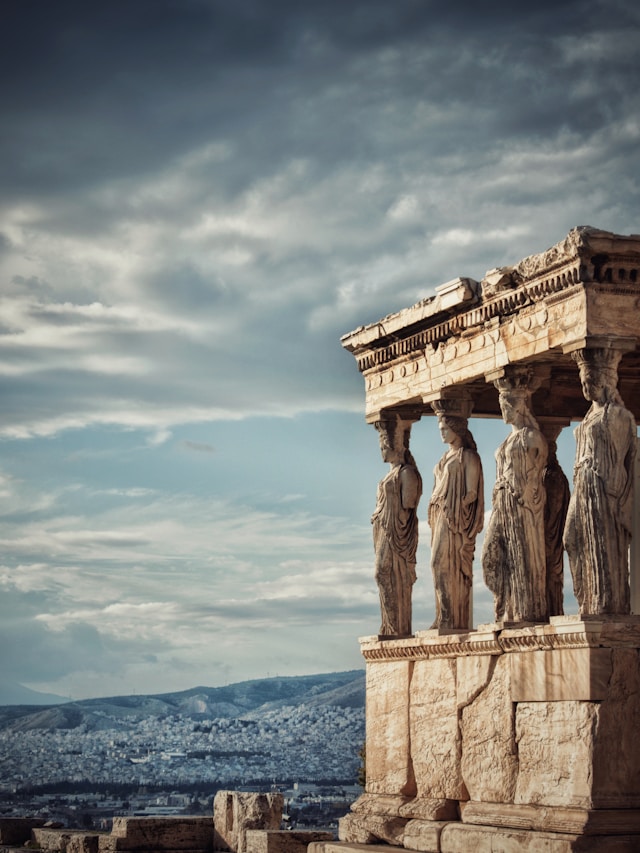
Greek mythology has left a lasting impact on architecture and art. In ancient times, sculptures, temples, and artworks were created to honour gods and goddesses. These themes/styles serve as a great inspiration for artists and architects today.
Examples of Greek mythology’s influence on architecture are statues and sculptures of figures in Greek mythology, such as gods, heroes, and other deities.
Another example is adaptations of classic elements in buildings today.
Modern artists also take inspiration from Greek mythology by creating works based on mythological figures and stories. For example, the Argos Graz, designed by Zaha Hadid, is a futuristic apartment with eye-like windows, inspired by the many-eyed giant Argos . The Acropolis, designed by Bernard Tsuchumi, was built not just as a symbol of Greek mythology but as a physical tribute to the gods. There’s also Dimitris KaramPatakis, who is the co-founder of K Studio, a Greek architecture and design firm. https://emag.archiexpo.com/the-olympic-legacy-from-ancient-to-modern-greek-architecture/
https://alukoenigstahl.md/en/blog/news/argos-graz-zaha-hadid-and-the-eyes-of-argos/
Overall, the legacy of Greek mythology endures because of its rich symbolism and timeless appeal, continuing to shape both architecture and art in meaningful ways.
https://www.zaha-hadid.com/archive
https://divisare.com/projects/342300-bernard-tschumi-architects-luigi-spina-pompeii-and-the-greeks
Language
Modern language has been impacted by Greek mythology, seen in words and phrases we use today, according to https://www.worldtranslationcenter.com/blog-posts/mythology-and-language-how-greek-myths-influenced-the-language . Many terms in English come from the stories of gods, heroes, and other characters in Greek myths.
For example, the word ‘atlas’ came from the name of a Titan who held up the sky. Its association with astronomy, endurance, and holding up the globe led to its modern meaning—a bound collection of maps. Namely, the word ‘narcissistic’ originated from a figure called Narcissus, a figure who fell in love with his own reflection, and now describes someone who is overly self-absorbed. More words derived from Greek mythology ar:e cloth, chaos, chronology, and erotic.
https://www.yourdictionary.com/articles/english-words-greek-mythology
Even other terms in English, such as the natural disaster “typhoon” (after Typhon, a monstrous giant), and the concept of “hypnosis” (named after the god of sleep Hypnos).
These examples show how deeply Greek mythology is woven into the way we speak, linking ancient stories to modern words and expressions.
Astrology
Astrology is deeply connected to Greek mythology. The belief that mythology couldn’t have developed without astronomy is supported by written texts from early civilisations that depict their understanding of astrology, according to Medium.
The planets in the solar system, except Earth, are named after Roman gods and goddesses, which are based on their Greek counterparts. Mercury is named after the messenger god Hermes, Venus is named after the goddess of love, Aphrodite, and Jupiter is after the king of the gods, Zeus. ( https://science.nasa.gov/solar-system/planets/ )
Many constellations, as well as the twelve zodiac signs, are also rooted in Greek mythology. Some constellations named after mythological figures are Orion, Pegasus, and Ursa Major. ( https://www.theoi.com/greek-mythology/star-myths.html and https://mymodernmet.com/famous-constellations/ )
These examples show how Greek mythology is linked with astrology. Today, these mythological gods and heroes continue to shape how we view cosmic science.
Conclusion
Though these legends were created thousands of years ago, Greek mythology continues to strongly influence society today. The myths carry on because they explore challenges, ideas, emotions, and other themes people can relate to.
Whether Greek myths influence brand logos, inspire your favourite films, motivate artists and architects, or provide words for both languages and astrological names, Greek mythology continues to leave a lasting impact. Ultimately, Greek mythology remains relevant as its themes and stories are timeless and universally relatable.
Bio
Anna is a year 8 student from Melbourne, Australia. She started at Bubots as a Pre-advanced student, and is now an Elite student with the hopes that writing will continue into her career. Aside from literature, she enjoys art and photography for fun.