
Would it be awesome to see some extinct animals cloned back from the dead, roaming the lands they once walked? It sounds awesome, sounds reasonable, sounds like a great idea, but what if I told you it would be illogical to bring these guys back?
Cloning extinct animals back to life would have negative effects on us, our economy, other animals, and even themselves. It takes a lot of time and materials to clone one of them. It took thousands of dollars for a mammoth meatball. It’s not even alive or edible, but it costs enough money for a family-sized house. Creating their enclosures would likely cost billions due to their immense size and the need to alter the climate to meet their specific needs.
Extinct animals would struggle adjusting to the new climate, species, and vegetation around them. It will take them and the ecosystem a long time to adapt to each other. Reintroducing them into the ecosystem that lived millions without them will cause massive ruptures to the ecosystem.
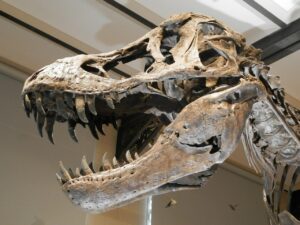
Imagine this, a perfectly harmonious ecosystem in the Amazon, then suddenly a T Rex appears and starts eating every mammal in sight. It tramples over large trees and destroys the ecosystem. Because the T-Rex is naturally savage and greedy, it can devour plenty of prey in one sweep. And since they will have little or no competition, their numbers will flourish by the thousands, even millions. If this happens, then resources will be depleted. The ecosystem will take decades or centuries to fully stabilize or be destroyed.
Let’s say we brought them back to life, and we kept close by. We would have a higher chance of catching an ancient disease that has now been resurrected because of us. Extinct animals have a chance of having an ancient pathogen, bacteria, or disease with them, which might cause another global pandemic if not contained.
Bringing them back from the dead doesn’t help us, but our inner child’s dream is to see one in real life. They don’t benefit from existing anymore, as the Earth survives without them for millions of years. We don’t benefit from them by being only a luxury or a scientific breakthrough.
Reference/s:
About the Author

Alvaro (Calix), 15 years old, is a badminton player and a toku fan. He plays badminton for fun, and when he cannot play, he will watch tokusatsu content online. He is good at math because he practiced it at a young age, and it became his favorite subject.
He also likes to sleep a lot and eat a lot of food. Then the cycle repeats over and over again.